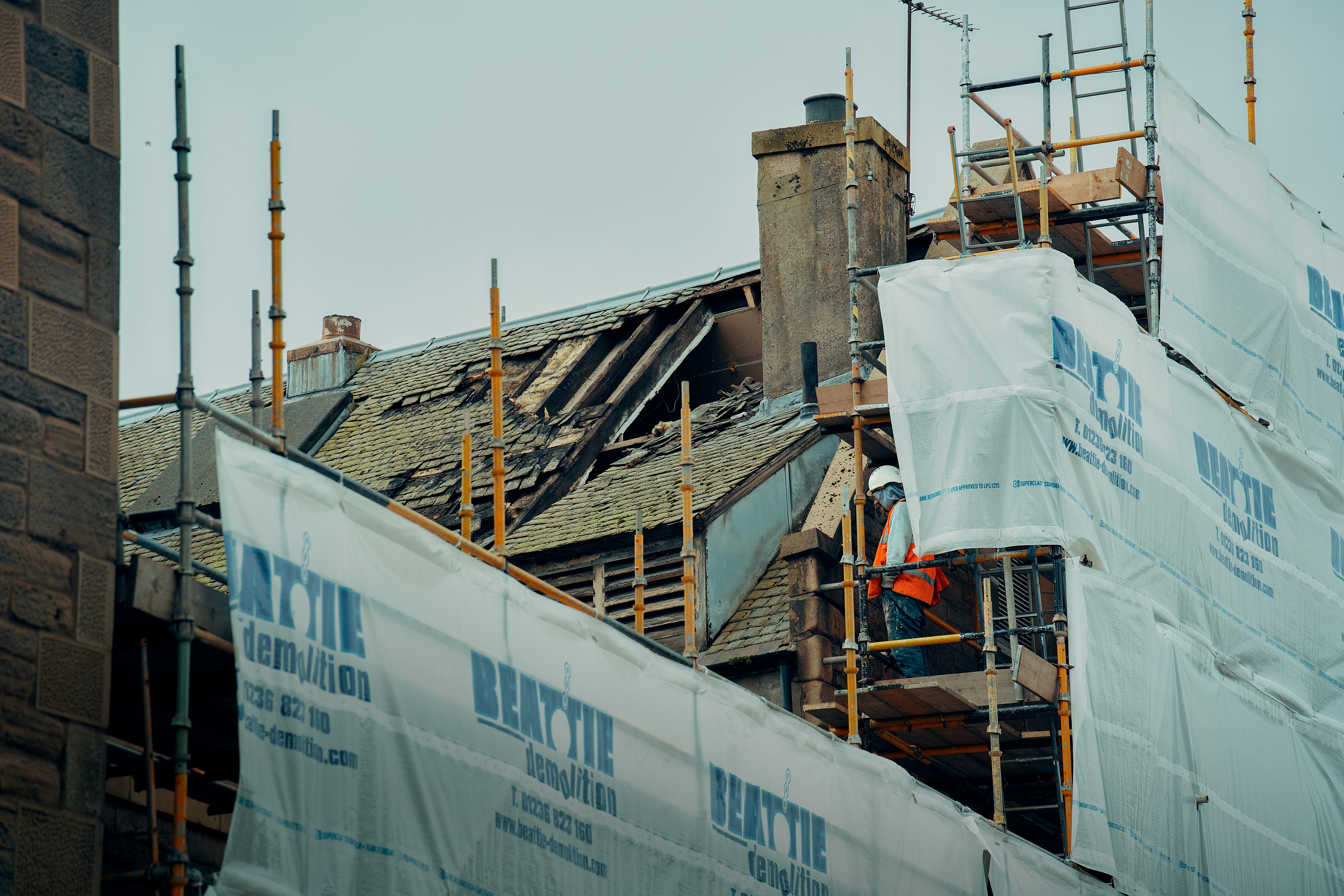
Whether the property has suffered minor smoke damage or extensive structural damage, mortgage lenders will often apply additional scrutiny before agreeing to lend. In some cases, a mortgage application may be declined entirely. This guide explains why fire-damaged properties can be difficult to mortgage, what lenders look for, and how bridging finance can help buyers purchase, repair and refinance these properties.
Can You Get a Mortgage on a Fire Damaged Property?
The answer depends on the severity of the damage. Some properties affected by minor fire or smoke damage may still qualify for a conventional mortgage. However, where the fire has affected the structure, roof, electrics, plumbing or habitability of the property, many lenders will refuse to lend until repairs have been completed.
As a general rule: the more severe the damage, the more likely it is that specialist finance will be required to bridge the gap between purchase and restoration.
Why Do Mortgage Lenders Decline Fire Damaged Properties?
Mortgage lenders want to know that their security is safe, habitable and marketable. Following a fire, there can be significant uncertainty around:
- Structural integrity of walls, timbers and load-bearing elements
- Roof stability
- Electrical safety — wiring frequently requires full replacement
- Water damage caused by firefighting efforts
- Smoke contamination throughout the property
- Hidden defects not visible during a standard inspection
- Repair costs and whether contractor quotations are realistic
- Insurance availability and future saleability
If a surveyor cannot confirm the property's condition or believes substantial works are required before the building is safe or habitable, the lender is likely to decline the application.
What Makes a Fire Damaged Property Unmortgageable?
A property may be considered unmortgageable following fire damage if it has one or more of the following issues:
Fire can weaken timber, steel, concrete and load-bearing walls. If structural elements have been compromised, most mainstream lenders will require repairs before lending.
Where the roof structure has been affected, surveyors may be unable to confirm the property's stability — triggering an automatic decline.
Electrical wiring frequently requires full replacement following a fire. Lenders will not proceed where electrical systems are unsafe or incomplete.
Smoke can penetrate walls, ceilings, insulation, ventilation systems and internal finishes throughout the property — affecting habitability and value.
Many mortgage lenders require a property to have a functioning kitchen, a functioning bathroom, safe services and weatherproof accommodation. Where these are missing, a standard mortgage will typically not be available.
Can You Buy a Fire Damaged Property at Auction?
Yes. In fact, many fire-damaged properties are sold through property auctions specifically because they are difficult to finance using conventional mortgages. This concentrates the available buyer pool to cash buyers and those with access to specialist finance — which is precisely why discounts can be significant.
Auction buyers typically have 20 to 28 days to complete the purchase. This timeframe is almost always too short for a traditional mortgage application, making bridging finance one of the most common funding solutions for fire-damaged auction purchases.
What Surveys Are Needed for a Fire Damaged Property?
Before purchasing a fire-damaged property, buyers should understand the full extent of the damage. Depending on the circumstances, lenders and buyers may require some or all of the following:
- Full building survey
- Structural engineer's report
- Electrical inspection
- Roof inspection
- Insurance assessment
- Schedule of works
- Contractor quotations for all required repairs
These reports help establish the full scope of repairs required and give lenders and buyers confidence that the property can be restored to a mortgageable condition.
How AF Credit Can Lend on Fire Damaged Properties
AF Credit regularly considers residential and refurbishment bridging on properties that have been declined by mainstream mortgage lenders due to fire damage. We understand that many fire-damaged properties simply require time and capital to return them to a mortgageable condition.
Rather than focusing solely on the property's current condition, we assess:
- The property's value in its current state and its projected value once repaired
- The proposed repair works and whether the costings are realistic
- The borrower's experience and capacity to manage the works
- The exit strategy — refinance or sale
In many cases, we can consider lending where the borrower provides a schedule of repair works, contractor quotations, evidence that the works are properly costed, and a clear exit strategy.
AF Credit's underwriting focuses not on the fire damage itself, but on how the damage will be repaired and how the loan will ultimately be repaid. If there is a credible repair strategy and a clear route back to mortgageability, we want to find a way to make the transaction work.
Purchasing a Fire Damaged Property Using a Bridging Loan
The process typically works as follows:
Obtain building surveys, structural engineer reports and specialist inspections to confirm the extent of the fire damage and understand what repairs are needed.
Contractors prepare quotations for all required works — structural repairs, roof, electrics, internal finishes and any specialist remediation. This forms part of the evidence package submitted to AF Credit.
AF Credit reviews the property, the repair strategy and the exit route. We can consider both the purchase and the cost of works within our refurbishment bridging facility where appropriate.
The property is acquired using bridging finance. For auction purchases, this can be arranged to meet the 28-day completion deadline.
The fire damage is repaired and the property is restored. Works are managed by the borrower in line with the agreed schedule and quotations.
Once the property is restored, the borrower exits through residential mortgage refinance, buy-to-let refinance or sale of the property at its repaired open market value.
Example
A buyer agrees to purchase a fire-damaged house for £250,000. The property requires £50,000 of repairs to the roof, electrics and internal finishes. Because the property is not currently habitable, a mortgage lender declines the application.
The buyer obtains contractor quotations and secures a bridging loan through AF Credit to complete the purchase and fund the works.
Following completion of the works, the property is valued at £375,000 and refinanced onto a conventional mortgage — generating £75,000 of equity from a purchase-and-repair strategy that cost £300,000 in total.
Why Fire Damaged Properties Can Be an Excellent Opportunity
Most buyers searching for property are reliant on a mainstream mortgage. The moment a lender flags fire damage and declines, the majority of the buying market is removed from the table. That creates a very specific opportunity for buyers who can move with access to specialist finance.
The Strategy: Buy Damaged, Restore, Refinance
The discount you negotiate at purchase — driven by the inability of mortgage-dependent buyers to compete — often significantly exceeds the total cost of repairs. The fire damage is not the problem. With the right finance in place, it is the opportunity.
For experienced investors and developers, fire-damaged properties can provide:
- Reduced competition at point of purchase
- Below-market-value entry prices
- Significant value-add through restoration
- Strong equity positions following refinance
- Consistent deal flow — fire-affected properties come to market regularly
Frequently Asked Questions
Can I get a mortgage on a fire damaged house?
Possibly, but it depends on the severity of the damage. Significant fire damage often prevents mainstream mortgage lending until repairs have been completed. A bridging loan can fill the gap — allowing the purchase to complete and works to be carried out before refinancing onto a conventional mortgage.
Are fire damaged properties unmortgageable?
Not always. Minor damage may be acceptable to some lenders following a satisfactory survey. Severe structural damage, roof issues, electrical problems or uninhabitable conditions typically require specialist finance initially. Once repairs are completed, the property can usually be refinanced onto standard lending.
Can I buy a fire damaged property at auction?
Yes. Many fire-damaged properties sell at auction precisely because conventional buyers cannot finance them. Bridging finance is the standard solution — it can be arranged to meet the 28-day completion deadline where a traditional mortgage cannot.
Can I refinance after repairing a fire damaged property?
Yes. Once the repairs are complete and the property meets mainstream lender requirements, the majority of borrowers refinance onto a residential or buy-to-let mortgage to repay the bridge and secure long-term finance.
What does AF Credit require?
Typically, we require details of the damage, a schedule of repair works, contractor quotations confirming the cost of all works, and a clear exit strategy showing how the bridging loan will be repaid — either through refinancing or sale of the restored property.
If you've found a fire-damaged property and your mortgage lender has declined the application, AF Credit may be able to help. Provided the repair works are properly costed and there is a clear route back to mortgageability, bridging finance can provide a practical solution to complete the purchase, undertake the repairs and refinance onto long-term funding.
Get indicative terms