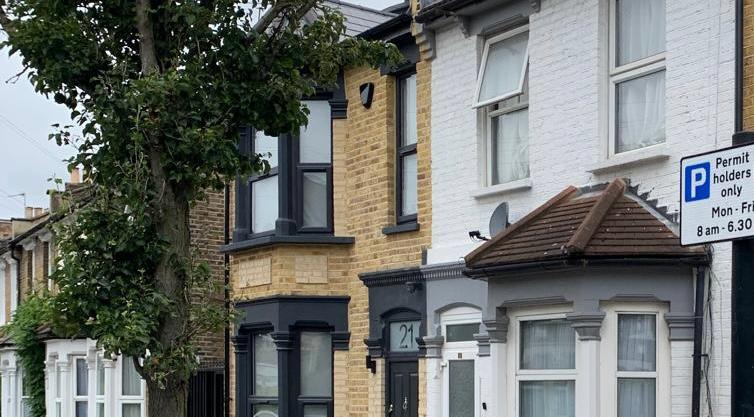
Leyton, East London — security property
A property investor's existing bridging lender refused to extend with a hard deadline approaching. Refurbishment works were complete and building control had signed off — but the Lawful Development Certificate hadn't yet been issued. AF Credit refinanced the existing bridge at full post-works value. No physical valuation. No searches. Completed in 10 working days.
Leyton, East London — security property
The existing bridging lender hit a hard deadline and refused to grant an extension. Refurbishment works were complete and building control had signed off — but the Lawful Development Certificate had not been issued, and the onward buyer required it before exchanging.
AF Credit refinanced the existing bridge without requiring a new physical valuation. Building control sign-off and comparable evidence supported the post-works value. A no-search indemnity policy removed the final bottleneck, compressing the rebridge to 10 working days.
£487,500 rebridge completed at 65% LTV in 10 working days. Existing lender repaid before the deadline. Borrower had 12 months to obtain the LDC and complete the onward sale — without a distressed exit.
If your bridging lender has refused to extend your loan, you are not alone. Many borrowers find themselves with completed refurbishment works but one outstanding legal or planning document preventing a clean exit. The choice, without a rebridge, is stark: a distressed sale at below-market value, a breach of the loan agreement, or a desperate search for a new lender under time pressure.
In this case, the borrower was an experienced property investor who had completed a comprehensive refurbishment and permitted development attic conversion on a semi-detached freehold residence in Leyton, East London. The finished property had a post-works value of £750,000 — a significant uplift on the pre-works purchase price.
The original bridging facility had been drawn to fund the purchase and works. With refurbishment complete and a buyer identified, the plan was to repay from sale proceeds. However, the buyer required a Lawful Development Certificate before exchange — and with local authority processing times running into weeks or months depending on workload, the existing lender's deadline arrived first.
The existing lender refused any extension. The borrower needed to refinance their bridge quickly — ideally without the delay and cost of commissioning a new physical valuation on a property where works had only just completed.
How We Did ItSpeed was essential. The existing bridge was expiring and any delay risked triggering a default. AF Credit's ability to underwrite without a physical inspection — and to use a no-search indemnity in place of local authority searches — made a 10-day rebridge possible.
| Item | Detail |
|---|---|
| Property type | Semi-detached freehold residence (refurbished, attic conversion via permitted development) |
| Location | Leyton, East London |
| Post-works value | £750,000 |
| Net loan amount | £487,500 |
| Loan-to-value | 65% |
| Monthly interest rate | 0.95% per month |
| Loan term | 12 months |
| Charge | First charge |
| Valuation method | No physical valuation — desktop underwriting |
| Searches | No-search indemnity utilised |
| Exit strategy | Sale to identified buyer (pending Lawful Development Certificate) |
| Time to complete | 10 working days |
A physical valuation is not always necessary. Where a property has recently been refurbished, building control has signed off the works, comparable evidence is strong and the loan-to-value is conservative, a lender with the right underwriting capability can often complete a no-valuation rebridge using a desktop assessment instead of a physical inspection. This reduces both cost and completion time — sometimes by a week or more.
In this case, four factors made a valuation-free approach possible:
AF Credit refinanced the existing bridge — completing the rebridge in 10 working days and repaying the original lender before the hard deadline was reached.
By underwriting the refurbished property without a physical inspection, and using a no-search indemnity in place of local authority searches, the process was compressed significantly. The borrower retained the property with 12 months to obtain the Lawful Development Certificate and complete the sale on their own timeline — rather than under lender pressure.
This case is a good example of a broader pattern: many bridging loans that appear to be in trouble are not distressed — they simply need a lender who can move quickly, underwrite sensibly and replace an existing bridge without adding unnecessary cost or delay. Replacing an existing bridge with a no-valuation facility is often faster than most borrowers expect.
Frequently Asked QuestionsYes, in the right circumstances. Where refurbishment works are genuinely complete, building control has signed off, comparable evidence clearly supports the post-works value and the LTV is conservative, a specialist lender may be able to complete a valuation-free bridge using desktop underwriting. This removes both the cost of a survey and the time it takes to arrange one.
A rebridge is the replacement of one bridging loan with another. It is most commonly used where the original lender has refused to extend, the borrower needs to restructure their facility, or additional time is needed to achieve the planned exit. Rebridging is different from a bridge extension — it involves a new lender taking over from the existing one, usually with a new first charge.
If your existing bridging lender has refused to extend and your deadline is approaching, a rebridge from a new lender is often the fastest solution. AF Credit can assess a rebridge case and issue indicative terms the same day. Where the asset, equity and exit are strong, we can often complete the refinance without requiring a new valuation — significantly compressing the process.
Yes. A Lawful Development Certificate confirms that permitted development works are lawful but is a separate process from building control sign-off. Where building control approval has been obtained, the LTV is conservative and a credible exit is clearly in place, a specialist lender may be prepared to refinance the existing bridge before the LDC is formally issued — providing structured time to obtain it.
A desktop valuation — or desktop underwriting — is an assessment of a property's value carried out remotely, using comparable sales, building control documentation, planning history and local market data, without a surveyor physically attending the property. It is faster and cheaper than a physical inspection and can often be completed the same day. Not all properties qualify, but where LTV is conservative and the asset is well evidenced, it can replace a full RICS report.
In this case, AF Credit completed the rebridge in 10 working days from instruction. Using desktop underwriting in place of a physical survey and a no-search indemnity in place of local authority searches removed the two biggest sources of delay. On straightforward cases, same-day indicative terms are available.
Whether your refurbishment has finished but paperwork is outstanding, your bridge lender has refused an extension, or you simply need time to complete a sale — AF Credit can often refinance an existing bridge without requiring a new physical valuation. Every case is assessed individually, but where the asset, equity and exit are strong, we can usually issue terms the same day.
Get same-day termsDisclaimer: Case study details have been anonymised to protect client confidentiality. All lending is subject to underwriting and credit approval is not guaranteed. Any property used as security may be repossessed if you do not repay your loan within the agreed term. AF Credit acts solely as a lender and does not provide financial advice.